Make or break? (GERAL)
jun25
Macau Chief Executive Sam Hou Fai has unveiled four major infrastructure projects aimed at driving the city’s long-promised economic diversification. While some hail them as potential “icebreakers” on the SAR’s path to a new development model, others question whether these ambitious plans risk becoming costly white elephant
https://www.macaubusiness.com/make-or-break/s
By Tony Lai
As the Macau government, under Chief Executive Sam Hou Fai, continues to warn of economic headwinds – amid subdued tourist spending and a tense geopolitical landscape – it has unveiled an ambitious plan to invest more than MOP40 billion (US$5 billion) over the coming years in four major infrastructure projects.
The initiatives – including a cross-border university town, the expansion of Macau International Airport, a new international tourism and cultural zone, and a technology and science industrial park – are envisioned to drive the city’s long-term growth and accelerate economic diversification beyond the gaming sector. However, at present, there are more questions than answers, given the government’s lack of concrete details so far.
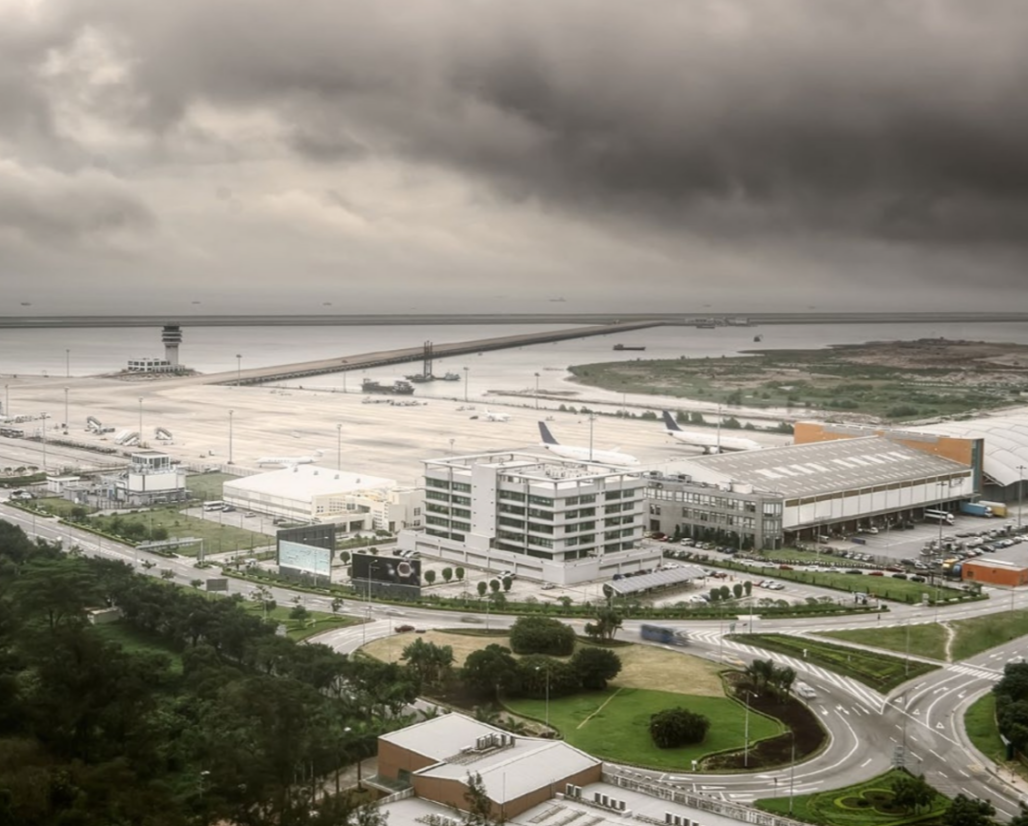
Following Mr Sam’s inaugural 2025 Policy Address in April, the government outlined plans for a MOP20 billion Macau–Hengqin University Town. The first phase includes a new University of Macau campus in Hengqin, set to open in 2028. Meanwhile, the airport expansion – budgeted at MOP6 billion – is already underway, with land reclamation in progress. The project aims to transform Macau into a regional aviation hub within the Pearl River Delta by 2030.
For the two other infrastructure projects that remain short on details – the MOP12 billion international tourism and cultural zone, and the science-and-technology park – the government has pledged to commence preparatory work in the second half of this year. This will be accompanied by a public consultation process, seeking input on key aspects such as potential locations, scale, design and operational models.
“It is essential for the administration to establish dedicated task forces for these four major projects, strengthening coordination between government departments and stakeholders, and developing mechanisms to ensure smooth implementation and oversight” – Legislator Si Ka Lon
Advancing ‘1+4’ strategy
“The four major infrastructure projects serve as ‘icebreakers’ to resolve the city’s industrial bottlenecks and are designed to drive the implementation of the ‘1+4’ strategy for economic diversification,” said legislator Si Ka Lon. The “1+4” policy refers to Macau’s strategy of strengthening its core sector of integrated tourism and leisure while nurturing four emerging industries: healthcare, modern finance, high technology, and convention, exhibition, sports, commerce and trade.
Mr Si, who also serves as a Macau deputy to the Chinese National People’s Congress (NPC), said the university town could help cultivate local and international talent, bridging the gap between the current higher education system and the city’s evolving industrial needs. The airport expansion, he added, would extend Macau’s international reach, particularly to Southeast Asian and Portuguese-speaking countries.
The proposed international tourism and cultural zone is expected to diversify the city’s visitor base beyond mainland Chinese tourists, while the new tech and science park could further enhance Macau’s evolving model of research and development in Macau and manufacturing in Hengqin and across the mainland side of the Guangdong–Hong Kong–Macau Greater Bay Area, he noted.
“It is essential for the administration to establish dedicated task forces for these four major projects, strengthening coordination between government departments and stakeholders, and developing mechanisms to ensure smooth implementation and oversight,” Mr Si said. “Comprehensive planning for investment and operations is also critical — this includes diversified financing structures, sustainable operational models, and the involvement of private entities.”
“The four major infrastructure projects serve as ‘icebreakers’ to resolve the city’s industrial bottlenecks and are designed to drive the implementation of the ‘1+4’ strategy for economic diversification” – Legislator Si Ka Lon.
‘White elephants’?
While the Macau government has yet to release detailed plans or timelines for its four flagship infrastructure projects, the Chief Executive pledged in April that the administration aims to achieve the stated goals within the next eight to ten years.
Macau-based political commentator Johnson Ian acknowledged that the proposed projects could potentially aid Macau’s economic diversification. However, he expressed concern over the lack of transparency and planning thus far. In a recent opinion piece, he noted that the proposals “have drawn criticism and ridicule from the public.”
“Over the past decade, the SAR government has repeatedly rolled out grand visions and catchy slogans — most of which have ended in disappointment — leaving the public wary of raising expectations,” he wrote. “Many projects in Macau have turned into ‘white elephants’ due to poor planning and weak execution — such as the Pac On Ferry Terminal and the Light Rapid Transit railway — both of which have faced heavy criticism.”
For instance, the LRT railway was first proposed in 2002 and initially slated for completion in 2006, but the system only began partial operations in 2019 — limited to the Taipa section. The Macau Peninsula’s East Line is not expected to be operational until at least 2029.
“[Concerning the four infrastructure projects], the SAR government has put forward nothing more than a paper-thin concept, lacking a detailed plan or proper project evaluation. How can this possibly convince the public to have confidence in the government?” Mr Ian questioned.
“The challenge doesn’t lie in building these projects, but in operating them sustainably. Without clear positioning and measurable benefits, the government may be forced to inject massive public subsidies year after year, turning them into fiscal black holes with long-term consequences,” he warned.
The political commentator urged the administration to commission professional feasibility studies and carry out comprehensive public consultations, emphasising the need to engage the wider community rather than restricting input to select associations.
“Ensuring the financial sustainability of the project is of utmost importance. It is crucial to avoid scenarios like the Light Rapid Transit railway, where massive investment led to long-term financial deficits” –
Wong Fai, president of the Macau Leisure Tourism Services Innovation Association
Hengqin: Competition vs. complementarity
According to the government’s preliminary outline, the proposed science and technology park is expected to align with national strategic priorities by attracting international research enterprises, talent, technology, and capital. The park is envisioned as both a launchpad for high-quality mainland Chinese tech firms looking to expand overseas and a landing hub for cutting-edge international technology projects.
A local university professor in the field of science and technology, who spoke on condition of anonymity due to the sensitivity of the matter, expressed scepticism regarding the project’s viability in the absence of concrete information. “It’s difficult to assess how this project will advance Macau’s tech sector when all we have are vague claims about how impressive it will be,” the professor said. “Will it be developed on a scale similar to the Hong Kong Science Park, or will it be a more modest effort?”
“While infrastructure is important, the ‘software’—such as funding mechanisms, policy support, and talent pipelines—is equally, if not more, essential,” the professor added. “What types of financial and operational support will the park offer? Will it cater to established firms, start-ups, or a mix of both?”
With construction costs exceeding HK$10 billion (MOP10.3 billion / US$1.27 billion) and more than a decade in development, the Hong Kong Science Park—operated by a public corporation—offers over 4 million square feet of research and development offices and laboratories. It now houses more than 2,300 tech firms from 25 countries and regions, employing a workforce of over 24,000. In addition to physical facilities, the park also provides a range of start-up, incubation, and acceleration programmes with various funding schemes.
The professor also questioned how Macau’s proposed park would complement existing initiatives in neighbouring Hengqin. “Hengqin already has infrastructure and preferential policies to support tech start-ups and attract mainland firms at lower costs and with fewer hiring restrictions compared to Macau. So how will this new park differentiate itself and avoid duplicating efforts?”
Zone for diverse visitor segments
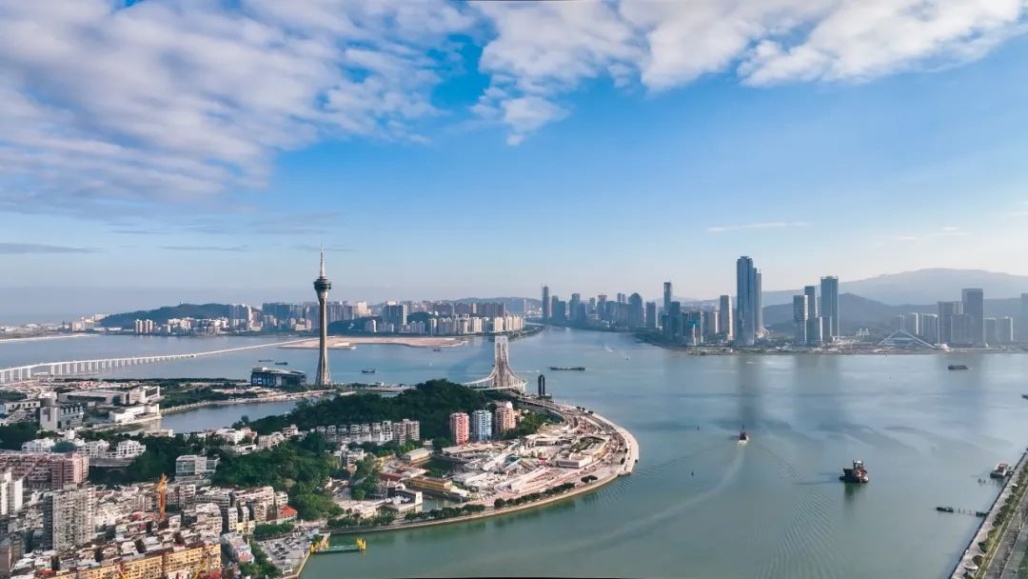
Another of Macau’s proposed mega projects—the integrated tourism and cultural zone—remains short on detail but carries ambitious aspirations. Envisioned along the city’s waterfront, the zone is touted as a future landmark, drawing comparisons with Sydney’s harbourfront and Singapore’s Marina Bay. The planned zone will feature a Chinese cultural museum, an international performing arts centre, and a world-class exhibition facility.
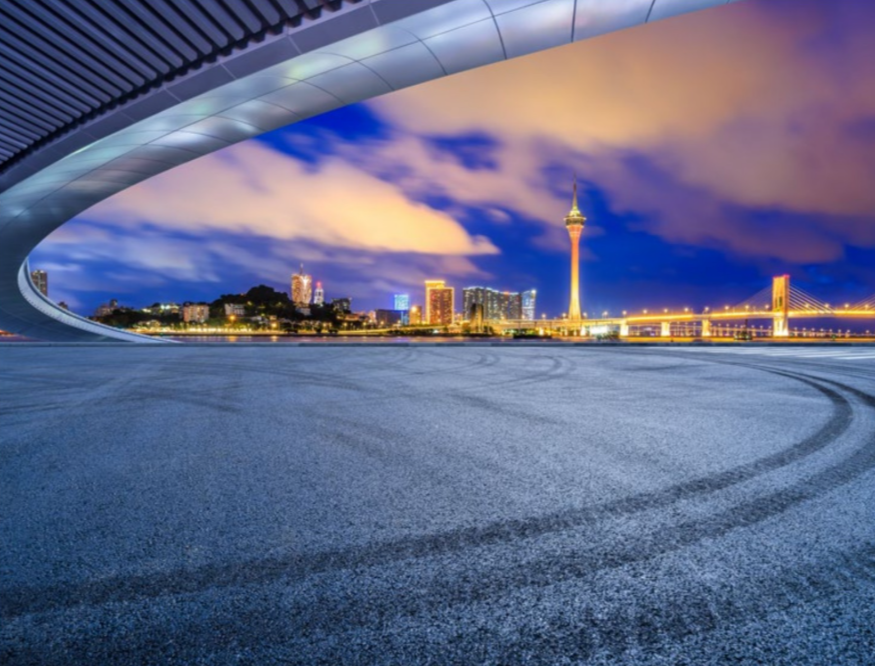
According to the government, potential locations under consideration include reclaimed land in New Urban Zones A and D, the area adjacent to the Macau Science Centre and the Macau Museum of Art, the vicinity of Macau Tower, and the long-abandoned Ocean World site in Taipa, opposite the Regency Art Hotel.
“The zone has the potential to become a landmark cultural hub for the Asia-Pacific region and beyond, showcasing Macau’s unique East-meets-West heritage while promoting Chinese culture,” said Chief Executive Sam Hou Fai in April. Wong Fai, president of the Macau Leisure Tourism Services Innovation Association, believes the zone could significantly enhance the city’s tourism offering and global competitiveness by diversifying attractions for both mainland Chinese and international visitors.
“At present, the industry is only aware of the broad direction outlined by the government,” he also pointed out. “But due to the lack of detailed information—such as the specific facilities, signature attractions, and the zone’s positioning—it’s difficult to make a comprehensive assessment of the potential benefits and challenges.”
To ensure the zone’s success, he emphasised the need for the government to incorporate Macau’s unique cultural appeal, cater to diverse visitor segments, and ensure sustainable operations—particularly in light of the substantial investment required.
Financial sustainability
He pointed to Hong Kong’s West Kowloon Cultural District as an example. “Take West Kowloon as an example—it’s a large-scale cultural and tourism project with distinctive features and massive capital investment,” he said. “However, from a commercial returns perspective, its success remains uncertain.”
Spanning 40 hectares and featuring 17 venues—including the Xiqu Centre for Chinese opera, the M+ Museum, and the Hong Kong Palace Museum—the West Kowloon project was supported by a HK$21.6 billion endowment from the Hong Kong government. Despite its cultural significance, the development has faced two decades of construction and persistent financial difficulties, with annual deficits averaging HK$1.15 billion a year over the past five years.
In response to its mounting financial woes, the Hong Kong government last year granted the project a new financial lifeline, lifting a restriction that had previously limited the district to renting out properties. It can now sell real estate on-site to generate revenue.
Mr Wong noted that Macau’s proposed cultural hub would also take five to ten years to come to fruition and stressed the need for rigorous evaluation. He also called on the administration to clearly define the zone’s target audience and how it differentiates itself from similar projects in the region, including West Kowloon and the Palace Museum in Beijing.
“Ensuring the financial sustainability of the project is of utmost importance,” he added. “It is crucial to avoid scenarios like the Light Rapid Transit railway, where massive investment led to long-term financial deficits. During the planning phase, comprehensive consideration must be given to sustainable operations and achieving a balanced budget.”
The four major infrastructure projects
- Macau International Integrated Tourism and Cultural Zone
- Macau Science and Technology Research and Development Industrial Park
- Macau-Hengqin International Education (university) Town
- Expansion of the Macau International Airport


Comments
Post a Comment